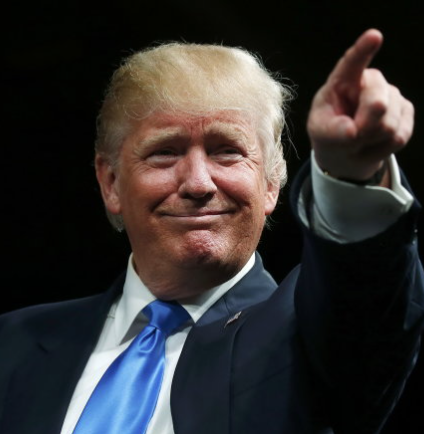
Wasserman Schultz: SAVE America Act Would Block 70 Million Women From Voting
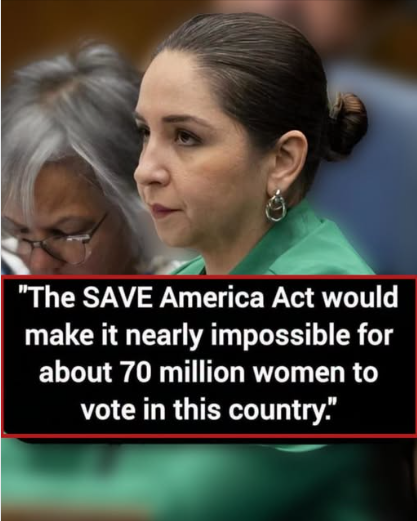
Florida congresswoman says voter ID bill’s proof-of-citizenship requirement creates “huge hurdle” for married women whose legal names don’t match their birth certificates
By [Staff Writer] | September 11, 2026
WASHINGTON — Rep. Debbie Wasserman Schultz (D-Fla.) warned that the SAVE America Act would make it “nearly impossible for about 70 million women to vote in this country,” becoming one of the most prominent Democratic voices opposing the Republican-backed voter ID and citizenship verification legislation.
“It would stop me from being able to register to vote and prove who I am,” Wasserman Schultz said, noting that millions of women nationwide face the same problem because their birth certificates do not match their legal names. “This law throws many obstacles in people’s path to registering to vote, and a huge hurdle to prevent so many women from being able to prove who they are”.
What the Bill Would Do
The SAVE America Act — formally the Safeguard American Voter Eligibility Act — would require documentary proof of U.S. citizenship to register to vote in federal elections and government-issued photo ID to cast a ballot. Acceptable documents would include a passport, birth certificate, or naturalization certificate, presented in person to register. The bill would also mandate photo ID at the polls for every election and force states to submit voter registration lists to the Department of Homeland Security quarterly for verification.
The House passed the measure 218-213 on February 11, 2026, in a move that drew sharp criticism after Republicans stripped a bipartisan veterans accessibility bill and replaced it with the election overhaul. The legislation has passed the House three times but remains stalled in the Senate, where it needs 60 votes to overcome a filibuster in a chamber where Republicans control 53 seats.
The Name-Change Problem
The core of the Democratic argument centers on married women who changed their last names. A birth certificate reflects a woman’s maiden name, but her current legal identification — driver’s license, Social Security card, passport — reflects her married name. Under the SAVE America Act, those documents would not match, potentially creating a bureaucratic barrier at the voter registration stage.
Wasserman Schultz has said approximately 84 million women have a birth certificate that does not match their legal name. The League of Women Voters has echoed that figure, stating that “nearly 70 million married women who have changed their last names” could be blocked from casting a ballot under the legislation’s “restrictive documentary proof of citizenship requirements”.
Rep. Hillary Scholten (D-Mich.) made a similar argument on the House floor, saying that in Michigan’s third district alone, 167,000 women could find themselves unable to register “simply because when they got married, they didn’t change both their ID and their birth certificate”.
Republican Counterargument
Republicans and the bill’s supporters reject the claim that the SAVE America Act would disenfranchise married women. A senior GOP staffer called the allegation “not right at all and simply another Democrat propaganda talking point,” adding that “every married woman should have their marriage license”.
The Federalist Society, a conservative legal organization, has argued that the SAVE Act “contemplates these name changes and provides protections so that Americans who have changed their names — because of marriage or otherwise — are not prevented from voting”. The group points to provisions directing the bipartisan federal Election Assistance Commission to establish guidelines for states to accept supplementary documents — such as a marriage license — to prove citizenship.
White House press secretary Karoline Leavitt said in March that “there is zero validity to these claims,” adding that the SAVE America Act “does not prohibit anyone from voting, with the exception of illegal aliens”.
However, PolitiFact’s analysis found that while the legislation does call for states to set up processes to handle name discrepancies, women with mismatched names would still be required to provide documentation about their name change or sign an affidavit to be able to vote — an extra step that supporters acknowledge.
Trump’s Push and Senate Roadblock
President Donald Trump has made the SAVE America Act a top legislative priority, at one point abruptly canceling the signing of a bipartisan housing bill and declaring on Truth Social that passing the act is “a national emergency”. Trump has said he believes the bill would ensure Republicans “never lose another election for at least 50 years”.
But even the bill’s strongest backers acknowledge the math is difficult. Senate Majority Leader John Thune (R-S.D.) has said, “We don’t have the vote”. Sen. John Cornyn (R-Texas) said, “I support voter ID and support only American citizens voting, but Democrats are implacably opposed to it, and we don’t have enough Republicans to fill the gap. So we should move on and focus on winning the midterms”.
House Speaker Mike Johnson has floated using the reconciliation process — which bypasses the filibuster and requires only a simple majority — to pass the measure as part of a third budget package.
Political Stakes
The fight over the SAVE America Act has become a central issue in the 2026 midterm elections. Republicans are using the bill as a campaign theme, with Michael Carbonara, the leading Republican challenger to Wasserman Schultz, saying in a campaign ad: “Right now, in this country, you don’t have to prove you’re a citizen to vote. No ID, no documents, literally just show up and cast a ballot. The SAVE Act fixes it”.
Democrats argue the bill is designed to suppress turnout among groups that lean Democratic. Senate Minority Leader Chuck Schumer (D-N.Y.) called it “a fringe piece of legislation that has now taken over the Republican Party, masquerading as election security when it’s really about laying the groundwork to meddle in the midterm elections and make it much harder for people to vote”.
Wasserman Schultz has been more pointed. “This is about one thing,” she said in a CNN interview. “Ensuring that it is much harder for people who are unlikely to go to the polls and vote for Republicans”.
Comments (0)
Loading comments...
May You Like
TRUMP HIT WITH 26 ARTICLES OF IMPEACHMENT
Barack Obama Draws Attention With New Literary Podcast