
“We’re Done”: Zelenskyy Defies Trump as
“We’re Done”: Zelenskyy Defies Trump as Ukraine Resumes Strikes on Russian Oil Refineries
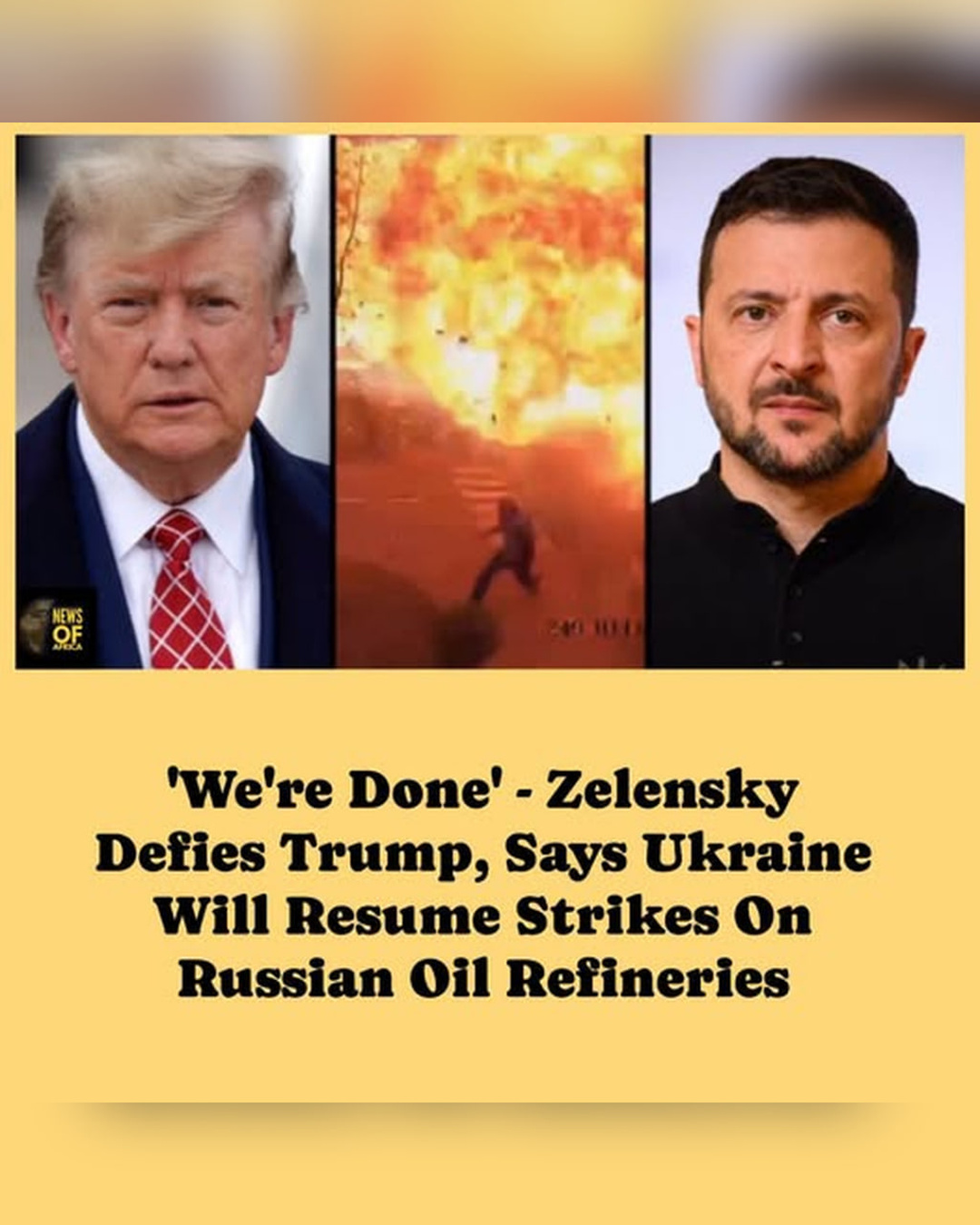


Ukrainian President Volodymyr Zelenskyy has announced that Kyiv will resume strikes on Russian oil refineries, escalating tensions with President Donald Trump over a proposed pause in attacks on energy infrastructure.
The announcement came on October 15, 2026, after Ukraine temporarily suspended attacks on Russian energy facilities following Trump’s declaration of an energy ceasefire between the two countries.
Zelenskyy explained that Ukraine had observed the pause but saw little reason to continue while Russian forces kept attacking Ukrainian energy infrastructure and civilian areas.
“The block is out. We’re done,” Zelenskyy told the Financial Times, signaling that Kyiv would no longer maintain its restraint under the existing circumstances.
The statement represented a direct challenge to Trump’s efforts to reduce attacks on energy facilities, which the American president argued could contribute to higher fuel prices and complicate diplomatic negotiations.
Trump had announced that Russia and Ukraine had agreed to stop striking energy infrastructure, although questions quickly emerged over the terms and implementation of the proposed arrangement.
Ukrainian officials said Russian attacks continued during the pause, damaging critical facilities and disrupting services in several areas of the country.
Kyiv argued that a meaningful ceasefire could not depend solely on Ukrainian restraint while Russian forces continued targeting the infrastructure that supplies electricity, heating, and other essential services.
The disagreement intensified when a Ukrainian drone strike hit an oil refinery in Russia’s Ryazan region, south-east of Moscow, setting off a fire at the facility.
The refinery is owned by Russian state oil company Rosneft and plays a significant role in supplying fuel to the Moscow region.
Russian regional authorities reported a major drone attack and said emergency services were assessing the damage. Ukrainian officials confirmed that Kyiv had struck a Russian refinery.
Ukraine has increasingly used long-range drones to target Russian refineries, fuel depots, and logistics facilities, seeking to disrupt revenue and supply chains that support Moscow’s military campaign.
Kyiv maintains that these operations are a response to Russia’s continuing attacks and form part of its broader effort to weaken the resources available for the invasion.
Trump, however, has criticized attacks on Russian refineries, arguing that damage to fuel production could push up diesel prices and affect consumers beyond the battlefield.
The dispute has exposed competing priorities: Washington is pressing for negotiations and lower energy prices, while Kyiv says its security cannot be separated from its ability to retaliate.
Zelenskyy has also expressed frustration over restrictions affecting Starlink military communications and concerns about reduced access to American intelligence and advance warnings of Russian attacks.
He has argued that these capabilities are essential to Ukraine’s defense, particularly as Russian forces continue using drones and missiles against cities and energy infrastructure.
The Ukrainian president indicated that Kyiv could consider another pause in attacks on energy facilities if the United States provided additional Patriot air-defense interceptors.
That proposal linked Ukraine’s willingness to limit its operations against Russian energy targets with a concrete request for assistance to defend its own territory.
Washington and Kyiv have offered different accounts of how the energy ceasefire was understood, while Moscow has accused Ukraine of undermining American diplomatic efforts.
The dispute has also prompted concern among European governments, which fear that a widening divide between the United States and Ukraine could weaken coordination among countries supporting Kyiv.
For Ukraine, continued attacks on Russian energy facilities are intended to impose costs on Moscow, but they also carry diplomatic risks and may affect international fuel markets.
For Trump, the challenge is to advance negotiations without creating the impression that one side faces pressure to comply while the other continues military operations.
The latest confrontation highlights how difficult it remains to establish even a limited ceasefire when the parties disagree over its terms, enforcement, and the conduct of their opponents.
Whether further diplomacy can produce a more durable arrangement will depend on reciprocal restraint, credible monitoring, and agreement on what each side must do to protect energy infrastructure.
Comments (0)
Loading comments...
May You Like

WWE BRONSON REED DEAD AT 38, STIMULANTS DETECTED, $11M INSURANCE PAYOUT FROZEN!

FLORIDA AIRBNB NIGHTMARE — 50 TEENS, 7 SHOOTING VICTIMS LINKED TO “SHOTS AT THE DOOR”!

EAST COAST MEGASTORM—2 MILLION HOUSES DAMAGED, 5 MILLION AT RISK OF BLACKOUTS, WATER FAILURES!










Popular Posts




