
What new trade commitments is Mexico making following the recent tensions
MEXICO CITY — A New Trade Strategy
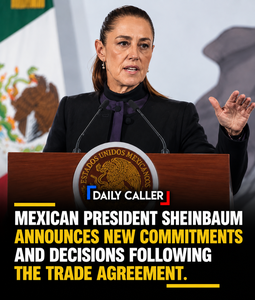
MEXICO CITY — President Claudia Sheinbaum is signaling new trade commitments with the United States, including increased American imports, as Mexico and Washington accelerate negotiations over North American commerce.
Sheinbaum said Monday that Mexico plans to purchase more goods from the United States while reducing imports from other countries, responding to Washington’s concerns about the trade balance.
The announcement follows a September 17 call between Sheinbaum and President Donald Trump, which Mexican officials described as constructive, although neither government has announced a final bilateral agreement.
Sheinbaum said the two governments reached several understandings during the call but stressed that details would remain private until negotiations produce a formal agreement acceptable to both sides.
USMCA Review Enters a Critical Phase
The talks are unfolding during the formal review of the United States-Mexico-Canada Agreement, or USMCA, the trade framework governing much of North American commerce since replacing NAFTA.
Washington has been pressing Mexico on trade imbalances, automotive rules, supply chains and economic security, while Mexico has sought lower U.S. tariffs affecting automobiles, steel and aluminum.
U.S. and Mexican negotiators have already held several rounds covering automobiles, steel, aluminum, agriculture, labor, electronic payments, economic security and regional manufacturing requirements.
According to the U.S. Trade Representative, both governments have emphasized North American production and supply-chain resilience, while discussing concerns about companies outside the agreement benefiting from regional trade rules.
China Becomes Part of the Equation
One major issue is China. Washington wants tighter safeguards against Chinese investment and goods entering North American markets through Mexico, while Mexican officials seek to protect investment flexibility.
Mexico has already moved toward higher tariffs on some Chinese goods and is considering stronger screening of foreign acquisitions, measures that could address U.S. concerns while reshaping Mexico’s import strategy.
Sheinbaum’s latest proposal could therefore represent a broader shift toward sourcing more products from the United States, particularly in areas where Mexico currently depends heavily on suppliers outside North America.
Mexican officials have argued that increasing regional production could reduce dependence on distant suppliers while supporting investment, manufacturing and supply-chain integration across Mexico, the United States and Canada.
Why the U.S. Market Matters
The strategy also reflects the importance of the U.S. market to Mexico. More than 80% of Mexican exports are sent north, making stable American market access crucial for Mexican businesses.
At the same time, Mexico is seeking relief from U.S. tariffs affecting important industries. Sheinbaum has repeatedly said reducing duties on Mexican steel, aluminum and automobiles remains a priority.
The negotiations are taking place under additional pressure because the United States and Canada have struggled to maintain their own trade discussions, increasing uncertainty around the three-country framework.
The Trump administration has declined to extend the USMCA beyond its existing 2036 expiration date, instead moving toward annual reviews that could produce repeated negotiations over market access and trade rules.
Mexico Seeks Balance
Mexico has said it wants to preserve the agreement while defending its economic interests and national sovereignty. Sheinbaum has emphasized cooperation with Washington without accepting measures she considers inconsistent with Mexican law.
Markets and businesses are closely watching the talks because changes to tariffs, automotive content requirements or rules of origin could affect manufacturing costs, investment decisions and cross-border supply chains.
For now, however, the reported commitments remain part of an ongoing negotiating process rather than a completed trade pact. Both governments still need to resolve disagreements before announcing binding terms.
What Happens Next?
Negotiators are expected to continue working toward a possible agreement, with the U.S. midterm elections approaching November 3. Mexico’s latest commitments could shape the next stage of negotiations.
Sources referenced: Reuters, U.S. Trade Representative, and Mexico’s Presidency
Comments (0)
Loading comments...
May You Like
OBAMA STEPS BACK INTO THE POLITICAL SPOTLIGHT

OBAMA STUNS ON INSTAGRAM: MESSAGE MARKING 34-YEAR MILESTONE SPARKS A BUZZ














