
Mike Johnson Has a Warning for November — and It Reveals What Republicans Fear Could Come Next
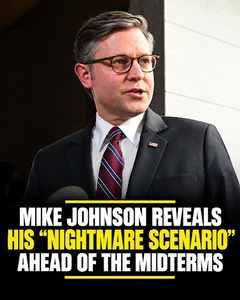
WASHINGTON — With the midterm elections approaching, House Speaker Mike Johnson is framing a potential Democratic takeover of Congress around a stark possibility: investigations of President Donald Trump and his administration.
A “Nightmare Scenario”
Johnson used the phrase while campaigning for Republican candidates in August, asking voters to imagine what he called a “nightmare scenario” if Democrats took control of Congress.
He said Democrats would impeach Trump immediately and transform congressional committees into investigative bodies focused on the president, his family and administration.
Johnson's remarks have resurfaced as the November 3 midterm elections draw closer and Republicans confront questions about how to maintain their congressional majorities.
The warning is not a prediction of what Democrats will actually do. It is Johnson's characterization of what he says could happen if Republicans lose control of the House.
What Johnson Actually Said
In his August remarks, Johnson described Democratic lawmakers as “insurgent Marxist Democrats” and argued that a Democratic majority would spend its time investigating the administration.
He specifically mentioned Trump, the president's family, Cabinet officials and alleged “lawfare,” while warning that such activity could have consequences beyond politics.
Johnson also said investigations could “roil the markets,” presenting a Democratic House as a potential source of political and economic disruption.
Those statements were delivered as part of Republican campaign messaging designed to emphasize the consequences of losing congressional control.
Why Investigations Matter
A change in House control would alter which party controls congressional committees, including committees responsible for oversight of the executive branch.
House committees can conduct investigations, request documents, hold hearings and issue subpoenas under congressional oversight authorities, although the scope and effectiveness of those powers depend on legal and procedural circumstances.
Johnson's warning therefore focuses on a real institutional consequence of a change in House leadership: committee agendas and investigative priorities could change substantially.
However, an investigation does not itself establish wrongdoing, and impeachment would require additional constitutional and political steps.
The Trump Factor
Johnson's comments also underscore how closely the Republican midterm campaign remains connected to Trump.
Reuters reported Thursday that Trump is intensifying his campaign activity ahead of November, planning a 32-day travel schedule intended to support Republican candidates across several states.
The president has repeatedly placed himself at the center of the Republican campaign, while some GOP candidates have emphasized local issues or their own records.
That creates a delicate political environment for Republicans seeking to retain congressional control while voters assess the administration's record.
Republicans Face Economic Questions
Economic concerns are also shaping the political environment.
Recent reporting has highlighted persistent voter frustration over gasoline prices and other living costs, while the continuing Iran conflict has added pressure to energy markets.
Reuters reported that Republican candidates are confronting dissatisfaction over those issues as Trump increases his campaign involvement before the election.
The economic debate gives Democrats another avenue for challenging the governing party, while Republicans continue arguing that their policies will produce longer-term benefits.
Johnson's Home District Offers a Snapshot
Johnson's own district in northwestern Louisiana provides another example of the complicated political environment facing Republicans.
An Associated Press report found that voters there have responded differently to the administration's major tax legislation, with some benefiting from tax changes while others face reductions in social assistance.
The report described continuing concerns about gasoline prices, the Iran conflict and household finances despite the district's strong Republican orientation.
Those local experiences illustrate why national campaign messages can interact differently with voters depending on their economic circumstances.
The Democratic Response
Democrats have described congressional oversight as a normal function of a legislature rather than inherently an attempt to destabilize the administration.
Their potential priorities would ultimately depend on which lawmakers win individual races and which committees they control after the new Congress convenes.
Johnson's warning therefore reflects the Republican leadership's campaign argument rather than an established Democratic legislative program.
The distinction is important because the outcome of individual congressional races will determine the composition and leadership of the next House.
A Broader Battle Over Oversight
The argument also reflects a broader dispute over the purpose of congressional investigations.
Republicans have conducted extensive investigations during periods when Democrats controlled the White House, while Democrats have similarly used congressional oversight when Republicans occupied the presidency.
The intensity, subjects and political consequences of those investigations have varied from Congress to Congress.
Johnson's warning places that long-standing institutional power at the center of the 2026 midterm campaign.
Trump Has Made the Stakes Explicit
Trump himself has also warned supporters about the consequences of losing Congress.
In recent campaign appearances, he has argued that Democratic control could expose his administration to investigations and impeachment proceedings.
Those comments have reinforced Johnson's message that the midterms are not simply about legislation but also about the balance of power between Congress and the White House.
For Republicans, maintaining control would preserve the current committee structure and leadership arrangement.
But the House Is Only Part of the Equation
Even if Democrats won control of the House, congressional investigations would not automatically produce impeachment or removal from office.
The Constitution gives the House the power to impeach federal officials, while the Senate conducts impeachment trials and requires a two-thirds vote to convict.
That means a House majority could initiate investigations or impeachment proceedings, but removing a president would require a separate Senate process and a much higher threshold.
The institutional distinction makes Johnson's “nightmare scenario” more complicated than the campaign slogan alone suggests.
The Campaign Enters Its Final Phase
The Senate departed Washington on September 30 for the final time before the midterm elections, shifting congressional attention toward campaigning before voters cast their ballots.
That leaves both parties with limited time to define what they believe the election should mean.
Republicans are emphasizing the consequences of Democratic control, while Democrats are focusing on economic conditions, government accountability and dissatisfaction with the administration.
The competing messages are likely to intensify during the final weeks of campaigning.
What Johnson's Message Is Really About
At its core, Johnson's warning is less about a specific piece of legislation than about control of congressional oversight.
His argument asks Republican voters to consider what could happen if the party loses its ability to determine which committees investigate the administration.
That makes the House majority itself a central issue in Republican campaign messaging.
For Democrats, the same committee power represents an opportunity to exercise oversight over an administration currently protected by a Republican-controlled House.
A Campaign Message, Not a Forecast
Johnson's description should therefore be understood as a campaign argument rather than a verified forecast of future congressional behavior.
Whether Democrats would pursue impeachment, which investigations they would prioritize, or how aggressively they would use subpoena powers would depend on the lawmakers elected and the political circumstances of the next Congress.
The image's dramatic wording captures the intensity of Johnson's message, but the underlying facts are more institutional than sensational.
The Stakes Beyond November
The election will determine more than committee chairs.
Congressional control affects legislation, investigations, spending decisions, oversight of federal agencies and the relationship between the legislative and executive branches.
A shift in House control would consequently change the political environment surrounding Trump's administration, even if individual investigations produced no immediate legislative or legal consequences.
That institutional change is why both parties are treating congressional control as a central question of the midterm campaign.
What Happens Next?
Trump is expected to continue campaigning for Republican candidates during the final weeks, while Johnson and other congressional Republicans will continue emphasizing the consequences they associate with Democratic control.
Democrats, meanwhile, will seek to make the election a referendum on economic conditions and the administration's record while presenting congressional oversight as part of their governing role.
The November vote will determine which party controls the House and therefore which lawmakers set its investigative priorities.
For now, Johnson's “nightmare scenario” remains a campaign warning. After the votes are counted, however, the balance of power in Congress will determine whether that warning becomes an actual governing challenge — or simply remains an election-season message.
Comments (0)
Loading comments...
May You Like


Obama Steps Back Into the Political Spotlight as Democrats Target Trump’s













