
XI BACKS RUSSIA ON UKRAINE AT APEC—U.S. OUT OF UKRAINE!
Xi and Putin Strengthen Ties at APEC as Trump Faces Questions Over America's Role in Ukraine
SHENZHEN, China — November 19, 2026 — Chinese President Xi Jinping and Russian President Vladimir Putin reaffirmed their close diplomatic relationship at the Asia-Pacific Economic Cooperation summit, as U.S. President Donald Trump sought discussions on ending the war in Ukraine. The unprecedented gathering raised questions about Washington's influence over negotiations and whether Kyiv would have a voice in decisions affecting its future.
The three leaders met at Kylin Villa in Shenzhen on Thursday after separate bilateral discussions that highlighted their competing priorities.
Trump had already spoken privately with Putin about Ukraine, according to the Kremlin. He then told Xi that the United States and China should help bring the war to an end.
The statements documented by Reuters, Associated Press and other news organizations point to continued American diplomatic involvement, rather than an announced U.S. withdrawal from Ukraine-related negotiations.
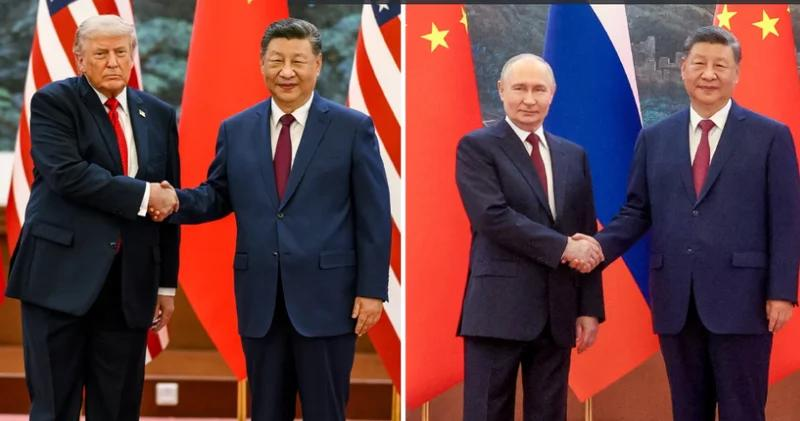
The APEC gathering was primarily an economic summit involving 21 member economies.
Its agenda included trade, investment, technology and regional economic cooperation.
But the presence of Trump, Xi and Putin shifted much of the attention toward international security.
Russia's war in Ukraine, the conflict involving Iran and the future of nuclear arms control were among the subjects under discussion.
The meeting was unusual because the three leaders rarely participate in a formal joint diplomatic session.
Their countries possess the world's largest nuclear arsenals and have competing interests across several regions.
That made the gathering important even before any agreement was announced.
For Ukraine, the central concern was whether discussions involving Moscow and Washington might influence future negotiations without Kyiv's direct participation.
Xi and Putin met separately on November 18, before the trilateral summit.
Russian reporting described their relationship as a strategic partnership that continued to develop despite international tensions.
Putin said cooperation between Russia and China was progressing steadily on the international stage.
The meeting reinforced the diplomatic relationship between Moscow and Beijing.
That relationship has become particularly important to Russia since Western countries imposed extensive sanctions following the invasion of Ukraine.
China has continued substantial economic engagement with Russia.
China has maintained a position that differs from the explicit military support provided to Ukraine by many Western governments.
Beijing has emphasized negotiations, political settlements and the need to consider security concerns.
At the same time, its continued relationship with Moscow has attracted criticism from governments that believe Chinese economic cooperation helps Russia withstand Western pressure.
These positions have made China's role controversial.
But describing Beijing as a close Russian partner is not the same as establishing that Xi formally endorsed every Russian military objective.
At Shenzhen, the documented statements focused on strategic relations and broader international stability.
The distinction is essential when assessing what the leaders actually announced.
Trump's public remarks pointed in a different direction from the claim that Washington was leaving Ukraine diplomacy.
During his meeting with Xi, the American president said both countries should help end the war.
He described the conflict as something he wanted to see concluded.
The statement indicated that Trump was seeking a role for China in diplomatic efforts.
It also suggested that he believed cooperation between Washington and Beijing might influence negotiations involving Moscow.
Reuters reported the remarks ahead of the trilateral meeting.
The comments did not specify a detailed peace plan.
They also did not establish that Xi had accepted a particular proposal.
But they clearly showed Trump discussing continued diplomatic engagement rather than announcing an American exit.
Before the summit, American officials had given different indications about whether Ukraine would be discussed in the three-way meeting.
A senior U.S. official initially suggested the subject would not be on the formal agenda because Ukrainian representatives were absent.
That approach reflected concern about discussing Ukraine's future without Kyiv at the table.
Trump subsequently said he expected the war to come up.
He also raised Ukraine directly during his bilateral meeting with Xi.
The shift generated uncertainty about the meeting's scope.
But a change in diplomatic agenda is not evidence of a completed agreement.
It shows that the administration's public messaging evolved as the summit approached.
The precise outcome of any private discussion would require a formal announcement or reliable account of the decisions made.
Trump met Putin before the three-way gathering.
The two leaders exchanged a friendly greeting before entering private discussions.
Trump described Putin as a friend and expressed optimism about their relationship.
Afterward, Kremlin foreign policy aide Yuri Ushakov said Ukraine had dominated the meeting.
Ushakov also described Putin's mood as extremely positive.
That characterization came from the Russian government.
It did not establish that Putin had obtained concessions from Washington.
Nor did it demonstrate that Trump had agreed to withdraw American support from Ukraine.
The most concrete public information was that the war had been a principal subject of the discussion.
Reuters reported that the leaders also addressed bilateral relations and the upcoming trilateral meeting.
For Putin, the summit offered an opportunity to strengthen Russia's diplomatic position.
The Russian president has faced international isolation from many Western governments since the February 2022 invasion of Ukraine.
Participation in a meeting with the American and Chinese presidents demonstrated that Moscow continued to engage with major world powers.
That symbolism was politically significant.
Russia also had an opportunity to present its views on Ukraine directly to Trump.
Moscow has sought a settlement reflecting its territorial and security demands.
Ukraine has rejected arrangements that would undermine its sovereignty or leave it vulnerable to renewed attacks.
The difference between those positions remains a central obstacle.
The summit provided a venue for discussing them, but did not establish that either side had accepted the other's terms.
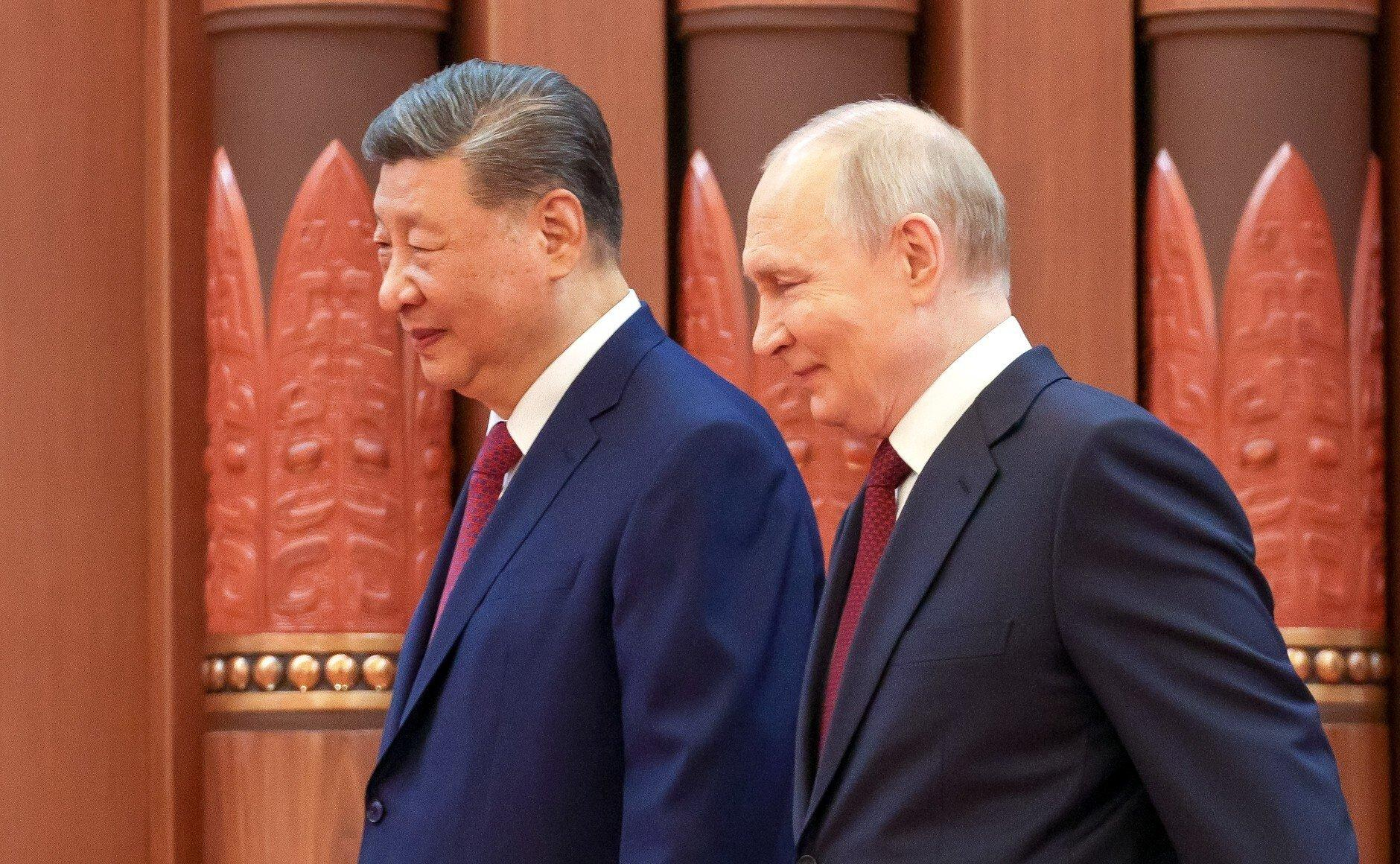
China and Russia have developed extensive cooperation in energy, trade and diplomacy.
Their relationship has become more prominent as both governments have experienced tensions with Washington.
China is an important market for Russian energy exports.
Russia provides China with resources, while Chinese companies supply a wide range of manufactured goods.
The relationship gives Moscow economic opportunities despite Western sanctions.
For Beijing, cooperation with Russia supports its broader diplomatic and economic interests.
However, the two governments are not identical in their priorities.
China has major trade relationships with the United States and Europe.
It also faces concerns from neighboring countries about regional security.
Xi must therefore manage the benefits of cooperation with Moscow alongside the risks of further confrontation with Western economies.
Economic relationships can affect a country's ability to sustain a prolonged conflict.
Energy exports generate revenue.
Imports provide access to industrial goods and equipment.
Financial arrangements influence the ability of companies to conduct international trade.
Western governments have argued that some commercial flows to Russia can support its military-industrial capacity.
China has rejected accusations that it is responsible for the war and has defended legitimate trade.
These competing claims have become part of the broader diplomatic dispute.
But they do not establish that Beijing has formally entered the war on Russia's side.
China's economic relationship with Russia is a significant factor in international policy.
It is not evidence that Xi announced a military alliance against Ukraine at APEC.
One of the most consequential facts about the summit was the absence of Ukrainian representatives.
Trump, Xi and Putin met to discuss international security.
But Ukrainian President Volodymyr Zelenskyy was not a participant in their trilateral meeting.
That absence raised concerns about whether major powers might negotiate arrangements affecting Ukraine without its direct involvement.
Such concerns have historical significance.
Governments have long been wary of agreements in which powerful states determine the security of smaller countries without their consent.
The Shenzhen gathering prompted comparisons with earlier great-power conferences.
However, the comparison does not establish that the leaders had reached an agreement to divide territory.
The available reporting describes a diplomatic meeting, not a completed settlement imposed on Ukraine.
Some analysts compared the summit with the 1945 Yalta Conference.
At Yalta, leaders of the United States, Britain and the Soviet Union discussed the postwar order in Europe.
The conference became associated with the emergence of competing spheres of influence.
The Shenzhen meeting brought together three powerful countries whose decisions can affect other governments.
That similarity helped explain the comparison.
But important differences remain.
The leaders were not wartime allies preparing to administer defeated territory.
They arrived with substantial disagreements and no publicly established plan for dividing the world into formal zones of control.
Analysts interviewed by Al Jazeera cautioned against treating Shenzhen as a new Yalta.
The comparison highlights concerns about power and representation, but it should not be mistaken for evidence of a secret territorial agreement.
The phrase could describe several very different policies.
It might refer to ending American military assistance, withdrawing diplomatic participation or refusing to participate in future peace negotiations.
Each would have distinct consequences.
A reduction in military assistance could affect Ukraine's access to equipment and supplies.
A diplomatic withdrawal would change Washington's role in negotiations.
A formal agreement recognizing Russian territorial claims would represent another separate decision.
None of those actions was established by the public announcements reviewed from the November 19 summit.
Trump's comments instead emphasized helping end the war.
That does not guarantee the continuation of every existing American policy.
It does mean that the summit cannot accurately be described as proof that Washington had formally withdrawn from Ukraine.
The claim that Washington demanded a contract requires clarification.
APEC is a regional economic forum rather than a court or treaty organization empowered to decide Ukraine's territorial future.
Its meetings can provide opportunities for bilateral and multilateral agreements.
But the forum itself does not possess authority to transfer Ukrainian territory or compel the United States to leave negotiations.
No authenticated contract was identified in the reviewed reporting that required America to withdraw from Ukraine.
Nor was there evidence of a signed agreement among Trump, Xi and Putin establishing new borders.
If a significant diplomatic agreement had been reached, its terms and parties would be essential to understanding its consequences.
The available reporting instead describes discussions about possible cooperation and unresolved disagreements.
Washington has played a major role in Ukraine-related diplomacy since Russia's full-scale invasion.
American policy has included military assistance, sanctions and negotiations with allies.
The scope and direction of that policy have changed over time.
Trump has emphasized his desire to end the conflict through negotiations.
Critics of his approach have questioned whether direct talks with Putin could place pressure on Kyiv.
Supporters argue that communication with Moscow is necessary to pursue a settlement.
Those disagreements concern the terms and methods of American involvement.
They do not establish that the United States has abandoned the diplomatic process.
The Shenzhen meeting showed Trump continuing to engage with both Putin and Xi over the war.
A durable agreement would need to address several difficult questions.
The most immediate involves the status of Ukrainian territory occupied by Russian forces.
Other questions concern security guarantees, ceasefire monitoring and the risk of renewed fighting.
Ukraine has consistently emphasized its sovereignty and the need for credible protection against future attacks.
Russia has demanded arrangements reflecting its security and territorial objectives.
Those positions are difficult to reconcile.
An agreement negotiated solely among outside powers could face serious problems if Kyiv rejected its terms.
That is why Ukraine's participation remains essential to the legitimacy and implementation of any eventual settlement.
The Shenzhen summit could influence diplomatic discussions, but it could not automatically resolve these issues.
European governments have substantial interests in the outcome of the war.
The conflict has affected regional security, defense spending, energy markets and refugee movements.
European countries have also provided financial and military support to Ukraine.
Their leaders have argued that European security cannot be determined without European participation.
The prospect of a major-power agreement involving Washington, Moscow and Beijing therefore attracted concern.
Some European officials fear that negotiations conducted without Ukraine and its allies could produce arrangements difficult to enforce.
Others emphasize the need for sustained diplomatic engagement to reduce the risk of further escalation.
The disagreement is not simply about whether talks should occur.
It is about who participates, what principles guide the negotiations and how any agreement would be implemented.
As the leaders gathered in Shenzhen, Germany was expected to host a meeting involving countries supporting Ukraine.
The gathering was associated with the so-called Coalition of the Willing.
U.S. envoys Jared Kushner and Steve Witkoff were expected to participate.
That parallel diplomatic activity was significant.
It demonstrated that Ukraine-related negotiations were not limited to the APEC summit.
Discussions among Kyiv's partners continued even as Trump met Putin and Xi.
The existence of multiple diplomatic channels complicates any claim that Washington had abruptly ended its involvement.
Different meetings may address different aspects of the conflict, including security guarantees and potential settlement arrangements.
Their outcomes must be evaluated separately rather than treated as evidence of a single undisclosed agreement.
The Shenzhen summit also focused on nuclear weapons.
The United States and Russia possess the world's largest nuclear arsenals.
China has a smaller but expanding stockpile.
Trump has expressed interest in an agreement involving all three countries.
The expiration of the New START treaty in February 2026 increased pressure for a new arms-control framework.
However, the countries disagree over how restrictions should be structured.
China has argued that its arsenal remains much smaller than those of Washington and Moscow.
Russia and the United States face their own strategic disagreements.
The challenge illustrates why the summit's agenda extended beyond Ukraine.
The three leaders were considering several major security issues at the same time.
Relations between Washington and Moscow influence both nuclear arms control and the war in Ukraine.
Negotiations on strategic weapons require a degree of communication and trust.
The continuing war has made those conditions more difficult.
At the same time, the United States and Russia have reasons to reduce the risk of nuclear escalation.
That creates incentives for dialogue even when the governments remain divided over Ukraine.
Trump's interest in broader nuclear negotiations may therefore coexist with his efforts to pursue a settlement to the war.
But the two issues should not be treated as interchangeable.
An arms-control discussion does not establish that Washington has accepted Russia's territorial demands.
Nor does it prove that Ukraine has been removed from future negotiations.
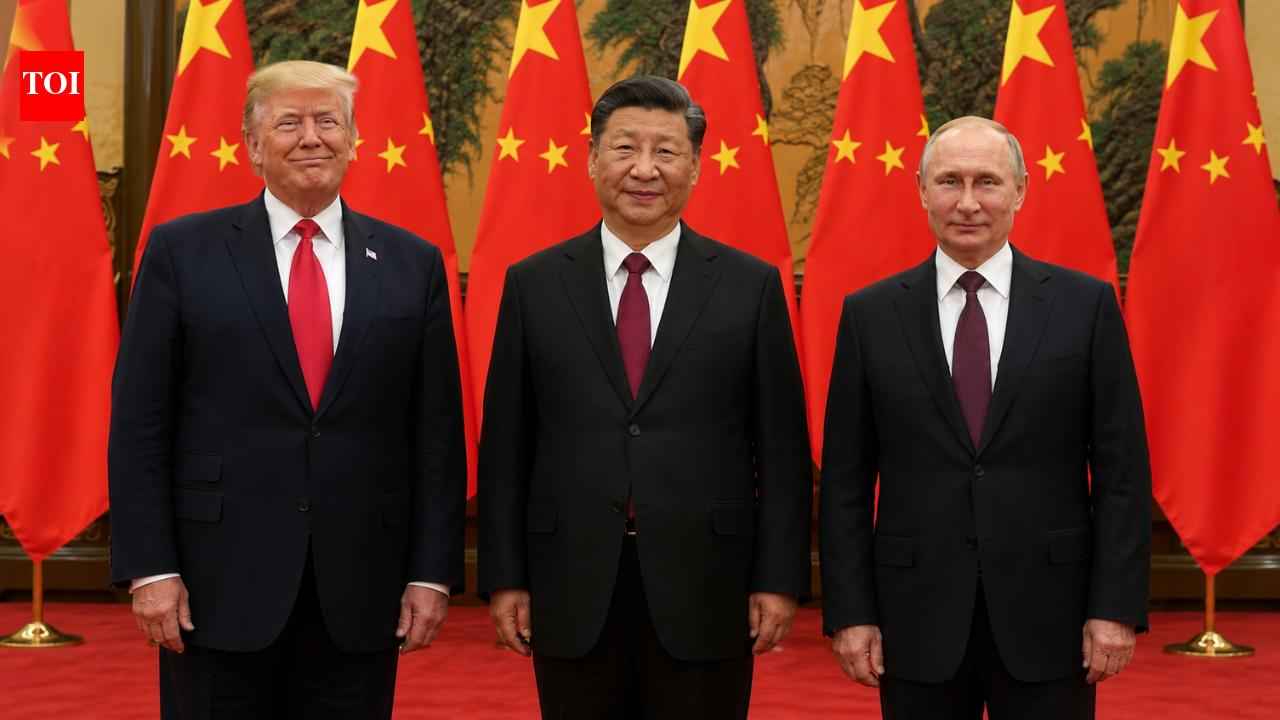
The summit's economic agenda also reflected tensions among the three countries.
Xi called for greater openness in international trade and criticized protectionism.
Putin argued that Western sanctions had failed to achieve their intended economic effects on Russia.
Trump emphasized American economic performance and opportunities for future trade agreements.
Those positions reflected different national interests.
China wants to protect access to international markets and advanced technology.
Russia seeks to reduce the economic impact of sanctions.
The United States is pursuing trade arrangements while maintaining restrictions in strategically sensitive sectors.
Reuters reported that Xi and Putin delivered their remarks before Trump's arrival.
Their comments demonstrated areas of shared criticism toward Western economic policies, but did not amount to a joint declaration about Ukraine's sovereignty.
The available public reporting establishes that the leaders supported continued dialogue on major international issues.
Trump advocated cooperation to reduce nuclear risks and help end the war in Ukraine.
Xi emphasized stability in relations among major powers.
Putin described the meeting as an opportunity for productive discussions.
Those broad positions did not eliminate their differences.
The leaders had competing interests over Ukraine, Iran, nuclear weapons and trade.
A statement supporting dialogue is not the same as a binding agreement.
Nor does a positive diplomatic atmosphere establish that one government accepted another's demands.
The central question is whether discussions will lead to concrete proposals and whether countries directly affected by those proposals will participate.
A genuine change in American policy would require identifiable government action.
For example, Washington could formally announce the termination of a particular assistance program, withdraw from a negotiating process or publish a new diplomatic agreement.
Such developments would have measurable consequences.
They could be examined through official statements, legislation, funding decisions and treaty documents.
The November 19 reporting does not establish an APEC contract requiring the United States to leave Ukraine.
Instead, Trump continued discussing ways to end the war.
The most serious concern raised by the Shenzhen meeting is the possibility of major powers discussing Ukraine's future without Ukrainian representation.
Diplomatic conversations among powerful governments can influence the conditions under which negotiations occur.
They may shape proposals, expectations and pressure on the parties.
But a settlement affecting Ukrainian territory and security would require decisions that Ukraine itself would have to confront.
The same applies to European governments whose security interests could be affected.
The absence of Kyiv therefore matters even without evidence of a secret agreement.
It raises questions about representation and the limits of great-power diplomacy.
Those questions will remain relevant as long as the war continues and negotiations remain unresolved.
The immediate test will be whether the summit produces sustained diplomatic engagement.
Washington may continue consulting Moscow and Beijing while maintaining separate discussions with Ukraine and European partners.
China could seek a larger diplomatic role, although Beijing has not publicly committed to a detailed settlement plan at the summit.
Russia will continue pursuing its own objectives.
Ukraine's government will remain central to any agreement affecting its sovereignty.
The leaders also face the challenge of negotiating nuclear arms reductions while managing other conflicts.
The outcome will depend on subsequent decisions, not simply on the symbolism of the Shenzhen gathering.
Xi and Putin demonstrated the strength of their diplomatic relationship at APEC.
But the public record does not establish that Xi announced unconditional support for Russia's territorial objectives in Ukraine.
Nor does it establish that Trump signed a contract to remove the United States from Ukraine-related diplomacy.
In fact, Trump publicly said Washington and Beijing should help end the war.
The Kremlin confirmed that Ukraine dominated his separate meeting with Putin.
The strongest documented concern is that Ukraine was absent from the trilateral discussions despite having the greatest direct stake in the conflict.
Comments (0)
Loading comments...
May You Like

PACIFICA PIER IN CALIFORNIA COLLAPSE REVEALS MASSIVE CRACK BENEATH THE OCEANs!

PENTAGON'S DECLASSIFIED UFO FILES — THE MYSTERY OF AN UNDERGROUND STORAGE PROJECT!

BANGCHAK REFINERY IN THAILAND SHUT DOWN, U.S. OIL PRICES JUMP 10%!









Popular Posts




