
Yankees Crush Red Sox 9-0
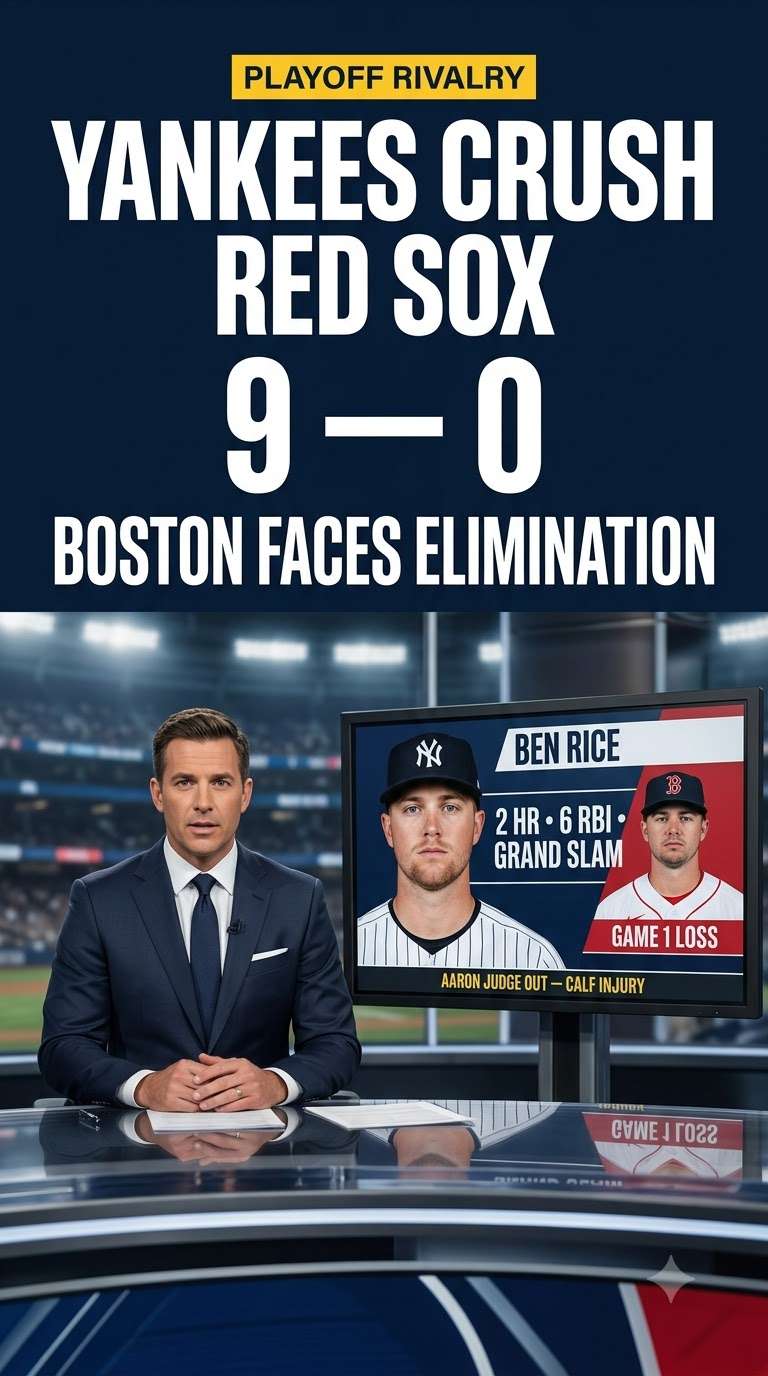
The Yankees did not have Aaron Judge in the lineup. They did not need him in Game 1.
New York opened its American League Wild Card Series against the Boston Red Sox with a 9-0 victory at Yankee Stadium, turning one of baseball’s oldest rivalries into a one-sided postseason statement.
Ben Rice supplied the thunder. Cam Schlittler supplied the silence.
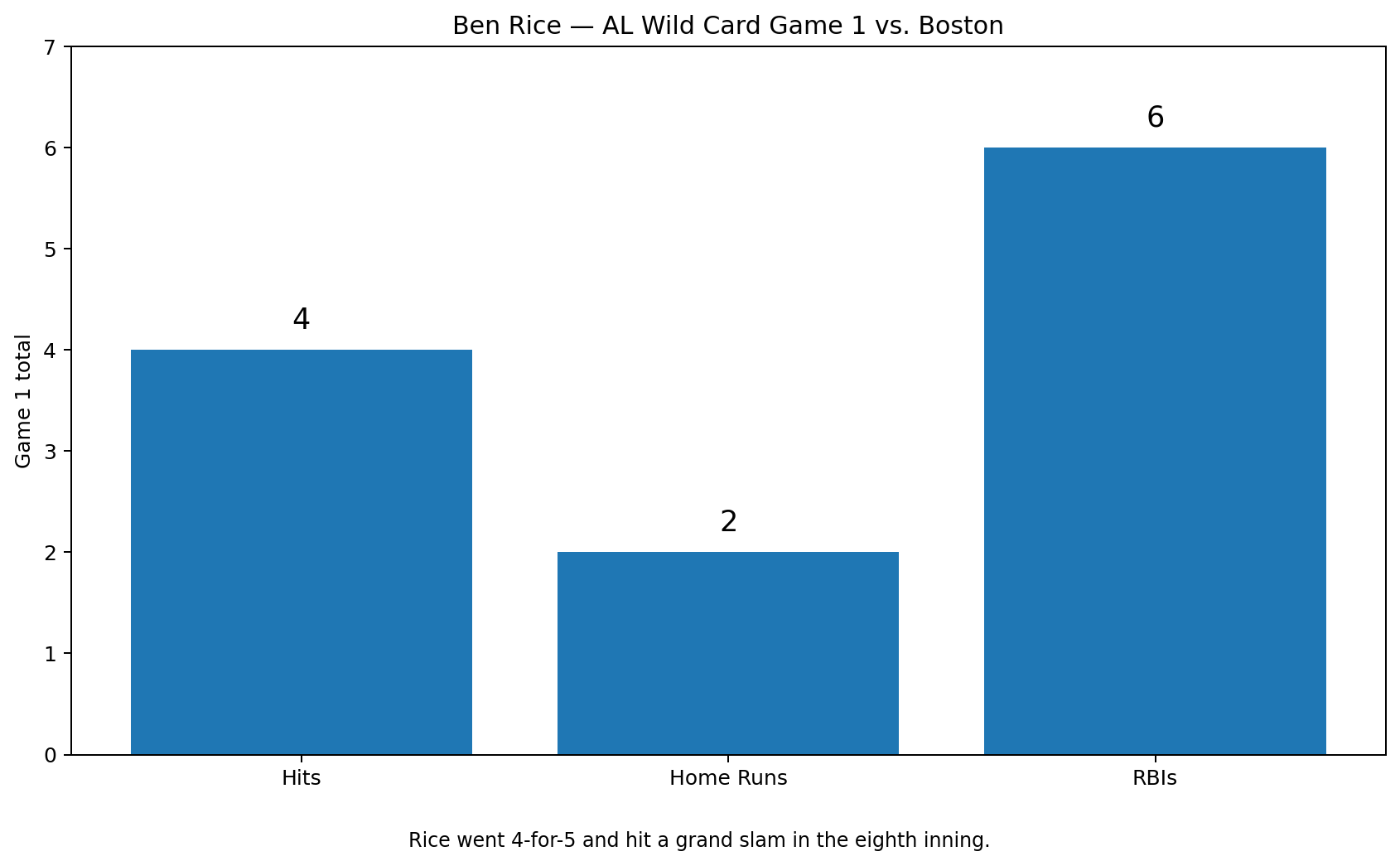
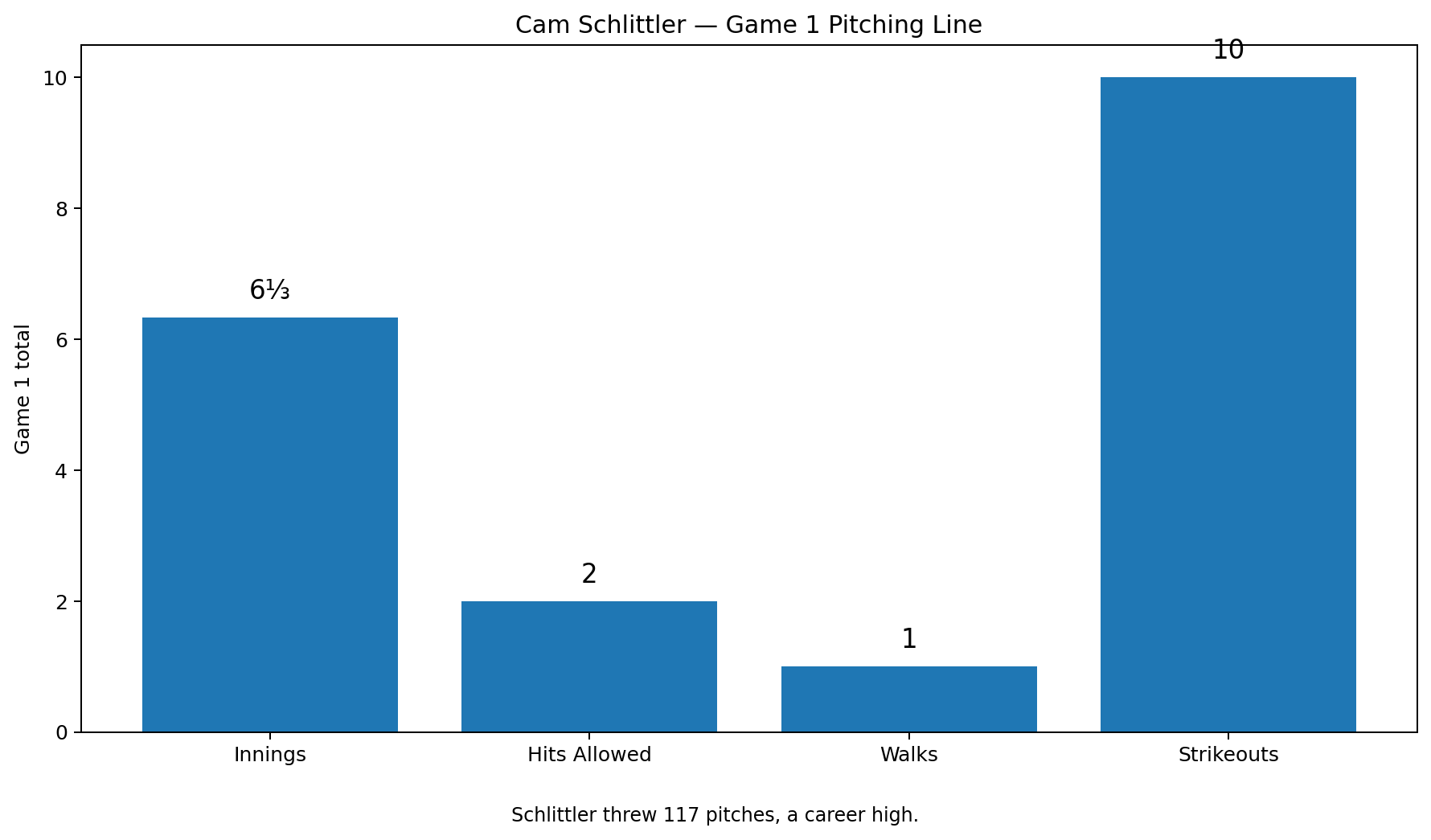
Rice went 4-for-5 with two home runs, six RBIs and a late grand slam. Schlittler held Boston scoreless for 6 1/3 innings, allowing only two hits and one walk while striking out 10.
By the time the final out was recorded, the Yankees were one win away from advancing and the Red Sox were one loss away from elimination.
Rice Became the Center of the Yankees’ Offense
With Judge unavailable because of a strained right calf, New York entered the series without the player most associated with its offense.
That created an obvious question: who would provide the damage in the middle of the lineup?
Rice answered it immediately.
He doubled, homered twice and drove in six of New York’s nine runs. His biggest swing came in the eighth inning, when he launched a grand slam that pushed the game completely out of reach.
The six-RBI performance tied one of the biggest postseason run-producing nights in Yankees history and gave the lineup a focal point on a night when its captain could only watch.
The Grand Slam Turned a Strong Win Into a Rout
Game 1 was already leaning heavily toward New York before Rice came to the plate with the bases loaded in the eighth.
The Yankees had controlled the game behind pitching and timely hitting, but Boston still had a mathematical path back.
Rice erased it.
His grand slam sent Yankee Stadium into another gear and transformed the scoreboard from a convincing lead into a 9-0 blowout.
It was also the Yankees’ first postseason grand slam since 2024 and the defining image of the night.
Schlittler Made Boston Look Stuck
Rice produced the loudest moment, but Schlittler controlled the game for most of the evening.
The right-hander struck out 10 and allowed only three baserunners over 6 1/3 innings.
He threw 117 pitches, a career high and the most by a Yankees starter in a postseason game since 2012.
Boston rarely created sustained pressure against him.
The Red Sox managed two hits and one walk, but Schlittler repeatedly won at-bats before Boston could build a real scoring threat.
That gave New York time to let its offense grow into the game rather than forcing the lineup to chase runs early.
Two Massachusetts Natives Hurt Boston Most
There was another layer to the result that made it especially painful for Red Sox fans.
Rice and Schlittler both grew up in Massachusetts.
Rice is from Cohasset and played college baseball at Dartmouth. Schlittler is from Walpole and played at Northeastern.
Both were raised in a region where the Red Sox dominate baseball culture.
On Tuesday night, they became the two biggest reasons Boston lost a playoff game in the Bronx.
The contrast was impossible to miss: two players developed in New England, wearing Yankees uniforms, delivered the most damaging performances against Boston.
New York’s Supporting Cast Kept Adding Pressure
The Yankees did not rely only on Rice.
Austin Wells drove in two runs from the bottom of the order, while rookie George Lombard Jr. collected three hits in his postseason debut.
That depth mattered because Judge was not the only player dealing with health questions entering the series.
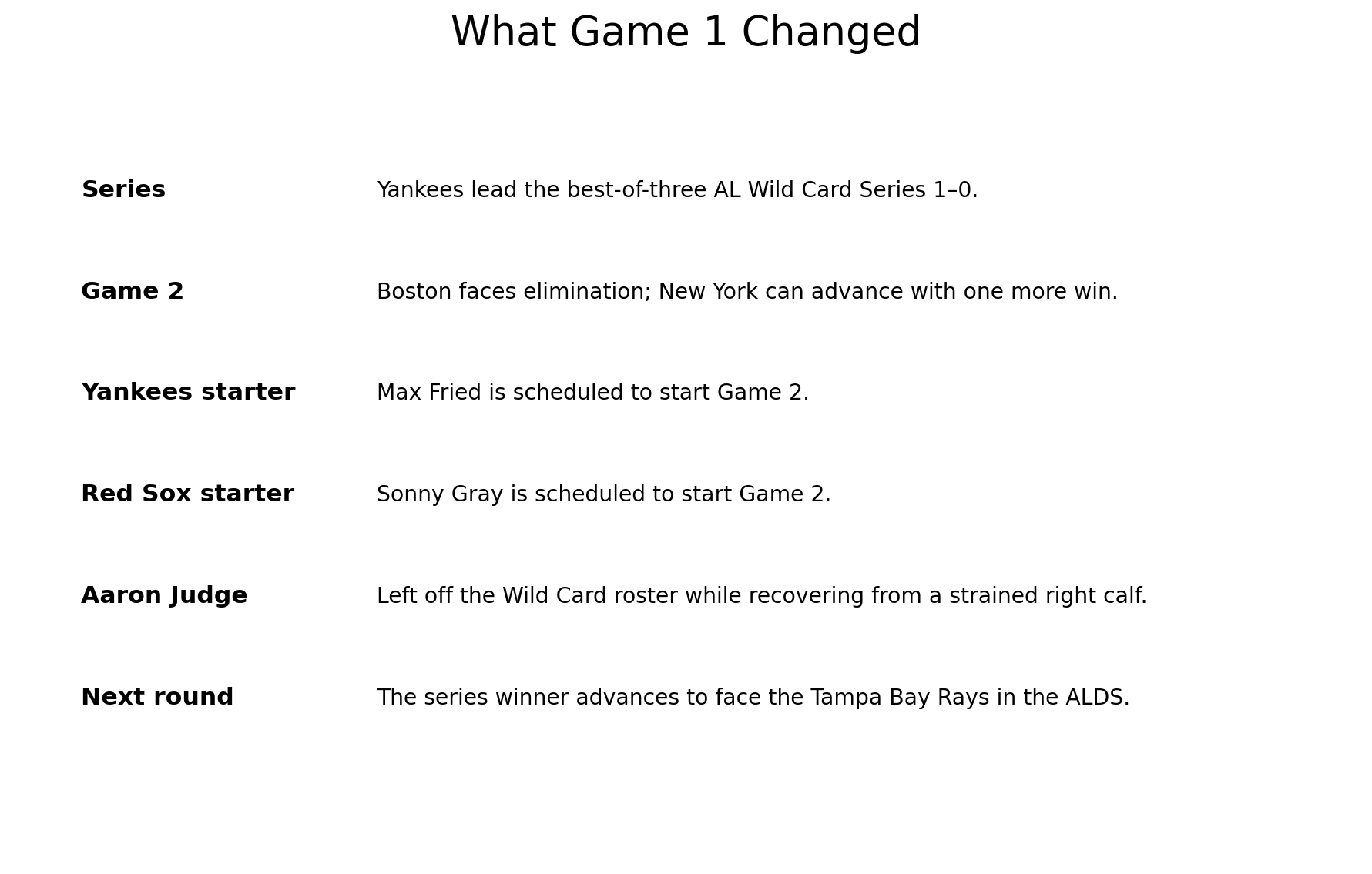
Giancarlo Stanton and Trent Grisham were both available after recent injuries but did not start Game 1.
New York still found enough offense from multiple spots to keep Boston from focusing on one hitter.
Judge’s Absence Was Supposed to Change the Series
Judge was left off the Yankees’ 26-man Wild Card roster because of a strained right calf suffered in September.
He had pushed to return and took batting practice in the days before the series, but the Yankees decided he was not ready for postseason game action.
That was a significant risk.
Judge had already missed much of the season because of a fractured rib, returned briefly in September and then suffered the calf injury.
New York chose not to gamble on another quick comeback.
Game 1 made that decision easier to live with, at least for one night.
Boston’s Biggest Problem Was Not One Bad Inning
The Red Sox did not lose because of a single mistake.
They were outplayed across the game.
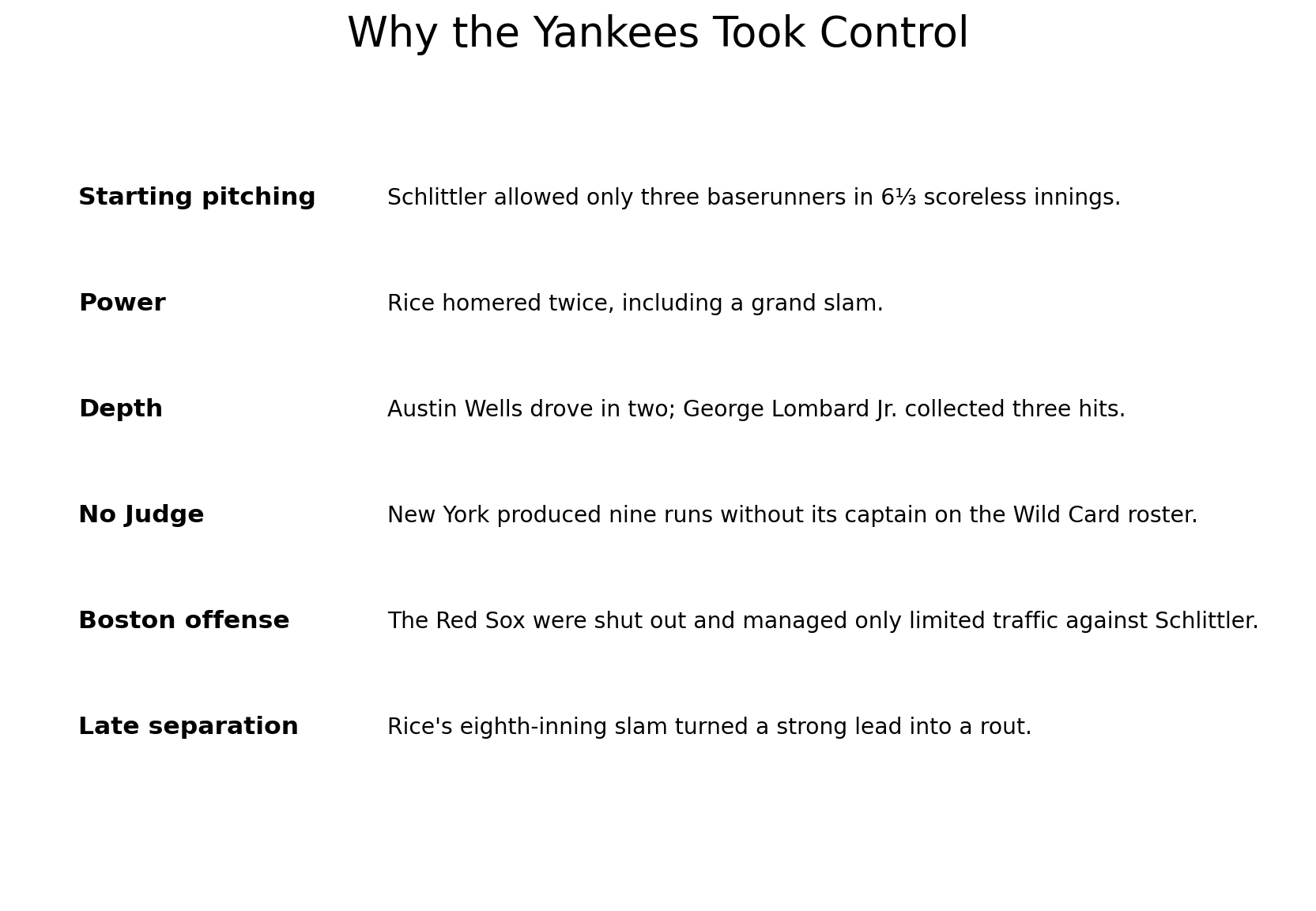
Schlittler controlled the strike zone. The Yankees put runners on base. Rice punished mistakes. New York added insurance. Boston never produced the sustained rally needed to shift the pressure back.
That is what makes a 9-0 playoff loss so difficult to dismiss.
A close defeat can turn on one pitch or one defensive play. This one reflected a broader gap in execution over nine innings.
The Rivalry Added Weight to Every Swing
Yankees–Red Sox playoff games arrive with history attached before the first pitch.
Every series is measured against earlier October meetings, from the dramatic games of the early 2000s to more recent Wild Card matchups.
That history does not change the standings, but it changes the atmosphere.
A blowout between these teams feels different from a blowout against an unfamiliar opponent.
For New York, Game 1 was a chance to establish control at home.
For Boston, the loss immediately turned Game 2 into a survival game.
The Best-of-Three Format Leaves Almost No Margin
The Wild Card Series is short.
That is the point.
A team that loses Game 1 does not have a week to recover. It has one game to avoid elimination.
New York now needs one more win to move on to the American League Division Series against Tampa Bay.
Boston needs two straight victories.
That pressure changes every bullpen decision, every pinch-hitting move and every inning that starts to tilt.
Game 2 Brings a New Pitching Matchup
Max Fried is scheduled to start Game 2 for the Yankees, while Boston is expected to counter with Sonny Gray.
That matchup gives the Red Sox a chance to reset the series, but it does not erase what happened in the opener.
Boston needs to find offense quickly after being shut out.
New York, meanwhile, can approach the game with the knowledge that its biggest offensive star is unavailable and it still scored nine runs.
That confidence may matter as much as the 1-0 series lead.
What Boston Has to Fix Immediately
The Red Sox need better at-bats at the top of the order and more pressure on New York’s pitching staff.
They also need to prevent another late inning from turning competitive baseball into a runaway score.
Against Schlittler, Boston struggled to create traffic.
Against the Yankees bullpen and Game 2 pitching, the Red Sox will need to force longer innings, reach base more often and make New York defend under pressure.
Without that, the series could end quickly.
What New York Learned Without Judge
The Yankees learned something valuable in the opener.
They can still create postseason offense without Judge being the center of every dangerous inning.
That does not make his absence unimportant. If New York advances, the team will want its captain available as soon as he is healthy enough to return.
But Game 1 showed that Rice, Wells, Lombard and the rest of the lineup can produce enough support when the pitching is dominant.
That makes the Yankees less predictable and more difficult to plan for.
One Win Changed the Entire Series
Before Game 1, the rivalry felt balanced enough to make a short series dangerous for either side.
After a 9-0 result, the structure is different.
The Yankees have control. The Red Sox have urgency.
Rice has become the offensive headline. Schlittler has reinforced his reputation as a postseason weapon. Judge remains a question for the next round rather than the current one.
Boston now has one game to prove that the opener was an outlier.
New York needs only one more night like this to send its rival home.
Comments (0)
Loading comments...
May You Like

Shocking news from Ohio: an unexpected development ahead of Trump's rally
TRUMP HIT WITH 26 ARTICLES OF IMPEACHMENT














